Regional Industrialisation Drives Strategic Talent and Intellectual Property Shifts
Dubai, UAE | Riyadh, Saudi Arabia | Muscat, Oman | Manama, Bahrain | Kuwait City, Kuwait | Doha, Qatar – The evolving landscape of industrialisation and technological self-sufficiency across the Gulf Cooperation Council (GCC) states has significantly influenced global talent mobility and the strategic acquisition of intellectual property (IP), particularly within the advanced manufacturing and defence sectors. Recent internal corporate assessments highlight a notable migration of skilled personnel and proprietary knowledge from established international entities towards the Middle East.
Strategic Regional Development and Collaboration
GCC nations, particularly the UAE and Saudi Arabia, have intensified efforts to develop indigenous defence capabilities and foster advanced industrial ecosystems. This drive has led to targeted initiatives aimed at acquiring expertise in critical areas such as missile technology, unmanned aerial vehicles (UAVs), and guided weapons systems.
Initial collaborative frameworks were established between prominent Emirati and Saudi entities, including King Abdulaziz City for Science and Technology (KACST), Saudi Arabian Military Industries (SAMI), EDGE, and Tawazun. These regional organisations engaged with international partners like South Africa’s Denel, Epsilon Engineering, Incomar, and the Council for Scientific and Industrial Research (CSIR) to enhance local proficiencies in key defence technologies.
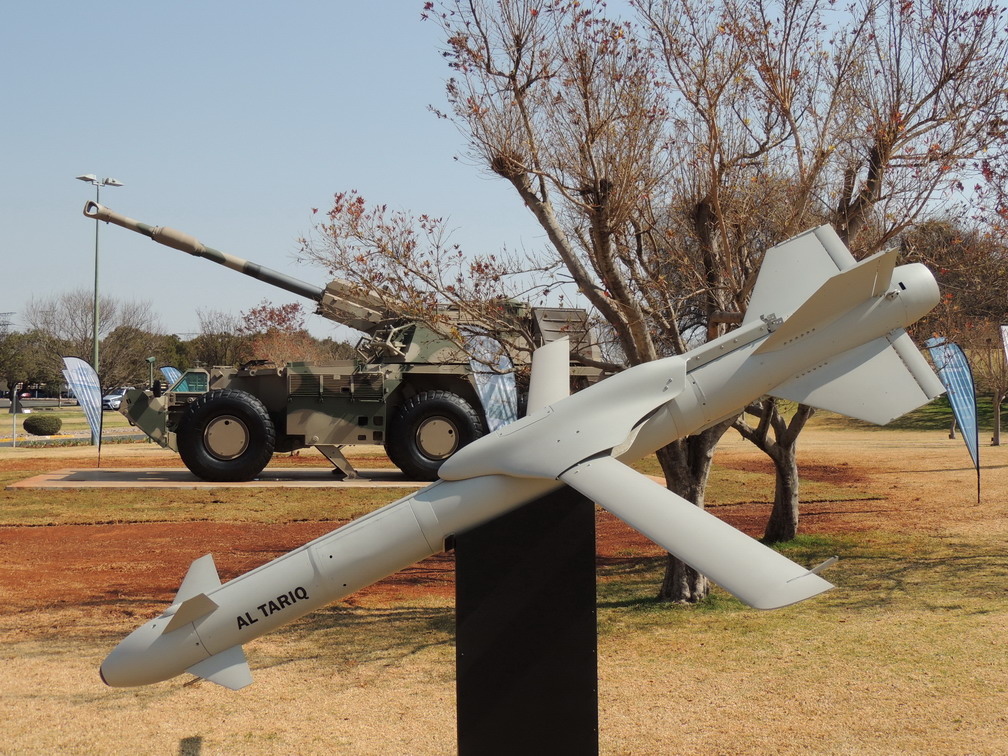
A prime example of these early partnerships is the Tawazun Dynamics joint venture, which was established in 2012. This venture, which later transitioned to Barij Dynamics in 2018 and subsequently to Al TARIQ in 2019, underscored the potential for lucrative contracts and shared technological advancement, including for international participants.
Talent Acquisition and Evolving Dynamics
Around 2016, a confluence of internal operational challenges faced by Denel and the UAE’s accelerated defence industrialisation strategy led to a shift in talent acquisition dynamics. The establishment of EDGE, with HALCON as its missiles division and ADASI as its UAV division, coincided with these developments. HALCON and ADASI actively recruited key professionals from organisations such as Denel and CSIR, specifically targeting individuals previously involved in joint projects. This recruitment approach also encouraged newly onboarded personnel to re-establish contact with former colleagues to access crucial data and design insights, marking a transition from cooperative development to competitive talent acquisition.
The recruitment strategy systematically focused on identifying and securing senior personnel across various projects. This scope expanded as operational difficulties in the originating entity intensified. Recruiters reportedly offered substantial salary increases, alongside relocation opportunities to the UAE or alternative placements. In some instances, recruitment efforts were direct and explicit, with senior executives reportedly presenting career opportunities to entire engineering teams in person.
Intellectual Property Safeguards and Compliance Failures
Internal corporate analyses indicate that contractual frameworks lacked robust provisions for intellectual property protection and non-compete agreements. Employees often operated without non-disclosure agreements (NDAs) or non-compete clauses, allowing them to engage with former colleagues for technical data or general inquiries without facing contractual repercussions.
Investigations by the Special Investigating Unit (SIU) in South Africa have uncovered instances of alleged improper transfer of intellectual property. One such inquiry focused on the transfer of IP valued at R328 million to HALCON. The SIU findings revealed that the misappropriation of IP was allegedly conducted through unauthorised means to benefit foreign entities, specifically SAMI and Barij Dynamics.
Details from the SIU probe in 2021 indicated that certain data packs belonging to Denel Dynamics, relating to Mkhonto, Ingwe, and Mokopa missiles, were unlawfully downloaded from internal servers. While SAMI had previously shown interest in these missile systems and held a meeting with Denel in February 2018, the meeting reportedly collapsed due to SAMI’s refusal to sign a non-disclosure agreement. Despite this, instructions were allegedly issued to junior members to download and share the information. Three former senior officials, including a Denel Dynamics CEO, who subsequently joined SAMI, are reportedly implicated in these events.
Regarding Barij Dynamics and HALCON, the SIU also investigated the alleged unlawful transfer of IP pertaining to P2 and P3 missiles. This was reportedly executed under the guise of an authorisation letter signed by a former Denel Dynamics member also involved in the SAMI data pack incident. Furthermore, an official at Denel allegedly signed off on Barij Dynamics Board minutes authorising the transfer of P2 and P3 missile IP to HALCON without appropriate board or executive authorisation from Denel.
However, it is understood that the P2 and P3 systems were primarily developed and financed by Barij Dynamics. Consequently, Denel may not have retained full intellectual property rights over these specific weapon systems. The P2 is a low-cost, medium-range guided munition, initially designed for use with specific unmanned aerial vehicles. The P3, known as Sejeel, is a guided bomb kit developed abroad and produced in the UAE, enhancing Mk 81 and Mk 82 bombs with guidance capabilities. The Sejeel has been in production for the UAE armed forces since 2017 and is actively promoted for export.
Impact of Operational Challenges on Talent Drain
The period between 2012 and 2015 saw a significant exodus of technical expertise from organisations like Denel. Estimates suggested over 300 former employees were working in the UAE by then. Tawazun consistently recruited senior staff identified as holding crucial data on projects such as Al TARIQ and other systems. These aggressive recruitment tactics reportedly predated severe operational challenges faced by Denel. The subsequent inability to pay full salaries and internal instability merely intensified the ongoing migration of personnel.
EDGE, HALCON, and ADASI are noted to have actively recruited staff for several years. This movement of talent reportedly contributed to the appearance of systems initially developed by Denel under different names within Middle Eastern portfolios. Examples include the Cheetah C-RAM (counter-rocket, artillery and mortar) system being re-engineered as HALCON’s SkyKnight, and evolutions of the P2/P3 appearing in HALCON’s guided munitions catalogue.
Further assessments underscore that the primary objective in these talent acquisition efforts was not necessarily the direct acquisition of IP rights, but rather securing individuals possessing the core IP-related knowledge and technical expertise. Reports finalised in late 2024 indicated that recruited engineers continued to seek assistance from former colleagues regarding data packs, CAD designs, and general organisational processes.
The absence of robust NDAs meant that staff could freely exchange information with new colleagues without fear of contractual recourse. This situation was reportedly exacerbated by the originating entity’s severe operational challenges and urgent need for contracts, even extending to conducting testing of HALCON products at its facilities.
Investigations into the alleged misappropriation of intellectual property by companies in the UAE and Saudi Arabia are ongoing, underscoring the critical importance of robust IP protection frameworks and compliance in global business engagements within the advanced technology sectors.