
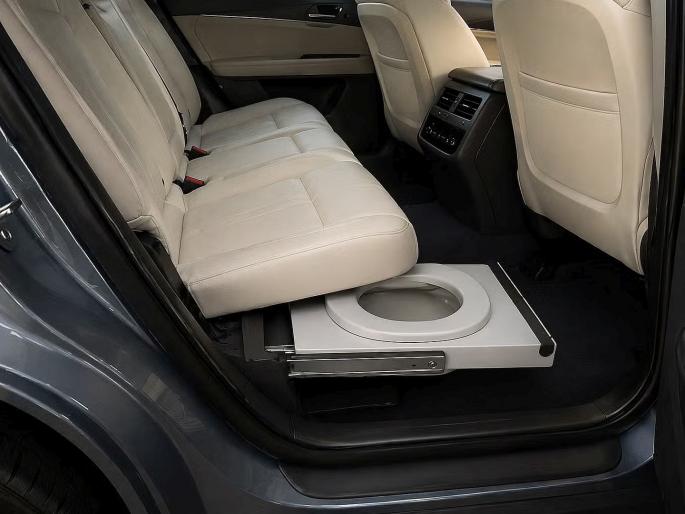
Automotive Innovation Sparks Intellectual Property Discussion with In-Car Toilet Patent
A recent development in the global automotive sector has drawn attention to the evolving landscape of intellectual property, as Chinese electric vehicle manufacturer Seres has successfully secured a patent for an “in-car toilet” system. This innovative concept aims to redefine passenger comfort and convenience during extended journeys, particularly in situations where access to conventional restrooms is limited.
The patent protection granted to Seres underscores a strategic move in leveraging intellectual property rights for competitive advantage in a rapidly advancing industry. The design detailed in the patent describes a sophisticated folding or hydraulic toilet mechanism integrated directly into the vehicle’s seating structure. This system is envisioned for deployment in upcoming electric vehicle models.
Beyond mere functionality, the patent application emphasizes advanced hygiene protocols. These include a vacuum-based waste management system coupled with specialized filters designed to mitigate odours, addressing critical concerns regarding cleanliness and practicality within a vehicle’s confined space. The stated benefits target long-distance travellers, individuals caught in traffic, and those traversing areas lacking adequate rest stops, offering a novel solution to a common inconvenience.
The announcement of this patent has generated considerable discussion among automotive enthusiasts and the public. Reactions have been varied, with some observers hailing the innovation as a necessary future amenity that could significantly enhance travel experiences. Conversely, others have articulated concerns regarding the practical implementation, maintenance of hygiene, and potential safety considerations within a vehicle’s interior.
As of now, the manufacturer has not disclosed any official timeline for the commercial launch of vehicles incorporating this patented in-car toilet system. The development highlights the increasing importance of robust intellectual property strategies in the automotive industry, where manufacturers are constantly seeking to differentiate their offerings through innovative features protected by patents.