
UAE Advances Electric Vehicle Infrastructure Under National Policy Framework
Abu Dhabi, UAE – The United Arab Emirates is significantly progressing its electric vehicle (EV) infrastructure, with a major national energy company announcing an ambitious roadmap to electrify the country’s highway network. This development is a direct reflection of the UAE’s commitment to its National Electric Vehicles Policy and broader sustainable mobility objectives.
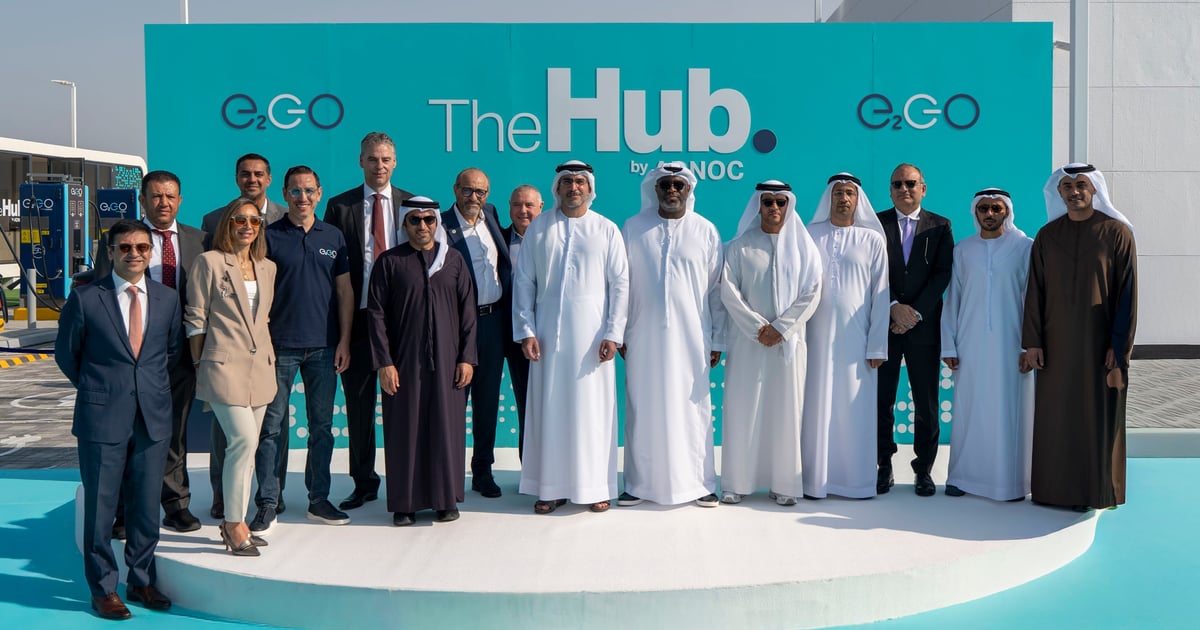
A new superfast EV charging hub, described as the largest of its kind in the Middle East, Africa, and Turkey, has commenced operations at Saih Shuaib on the vital E11 highway connecting Abu Dhabi and Dubai. This facility, equipped with 60 high-speed charge points, can power most EVs to 80% capacity in approximately 20 minutes, addressing a key concern for intercity commuters regarding ‘range anxiety’.
Strategic Expansion Aligned with National Targets
The national energy company has outlined plans to establish 20 EV charging hubs by the close of 2027, with 15 scheduled to be operational by the end of 2026. This comprehensive network aims to provide essential charging services across all core UAE national highways, forming a critical backbone for seamless long-distance EV travel and supporting the nation’s energy transition.
This initiative is closely aligned with the Ministry of Energy and Infrastructure’s 2050 target, which stipulates that 50% of all vehicles on UAE roads will be battery electric. Officials from the Ministry of Energy and Infrastructure underscored the project’s importance, particularly its strategic location on the E11 highway, as a key component of the UAE’s sustainable mobility agenda.
Government Incentives and Regulatory Support Bolstering Adoption
The expansion of the UAE’s EV infrastructure is significantly bolstered by ongoing government policy support and regulatory incentives. These measures include free EV registration, complimentary parking, and reduced charging tariffs, all designed to encourage greater adoption of electric vehicles among the populace.
Market forecasts project that EVs will account for over 15% of new vehicle sales in the UAE by 2030, a figure expected to rise to 25% by 2035. This anticipated growth is largely attributed to these robust government incentives and the systematic expansion of the charging infrastructure.
Collaborative Regulatory Environment
Beyond this major initiative, the UAE’s regulatory landscape is fostering a collaborative environment for EV infrastructure development. Recent deployments include new chargers in Dubai’s airport corridor. Furthermore, partnerships between international technology providers and local UAE companies are accelerating nationwide charging rollout, focusing on advanced solutions like vehicle-to-grid interaction and intelligent charging platforms.
Municipal authorities are also playing a crucial role, with entities like the Dubai Electricity and Water Authority (DEWA) and Parkin partnering to deploy 100 EV chargers across Dubai. These efforts are strategically targeting high-density residential and commercial areas, further mitigating range anxiety and enhancing accessibility for prospective EV owners.
The ongoing infrastructure development underscores the UAE’s proactive approach to establishing a comprehensive and supportive ecosystem for electric vehicles, firmly rooted in national policies and regulatory frameworks designed to achieve long-term sustainability goals.