
UAE Innovators File Provisional Patent for Biofertiliser Technology
Dubai, UAE – A team of three young innovators in the UAE has taken a significant step in intellectual property protection by filing a joint provisional patent application for a novel process that converts discarded chicken feathers into biofertiliser. This development, named “BioFeathers,” represents a potential advancement in sustainable agricultural practices and waste management within the GCC region.
The innovation, spearheaded by Adit Mital, Anushka Harlalka, and Maanit Misra, focuses on using bacteria to break down the resilient keratin found in chicken feathers, transforming them into nutrient-rich compounds suitable for plant growth. This approach seeks to avoid energy-intensive methods of feather disposal, addressing an environmental concern associated with millions of tons of poultry feather waste globally each year.
The provisional patent application, filed in April, covers specific elements of the process developed by the team. While acknowledging existing protocols in biofertiliser development, the innovators emphasize that their method incorporates unique modifications to chemical compositions, concentrations, and other procedural aspects, distinguishing their intellectual contribution.
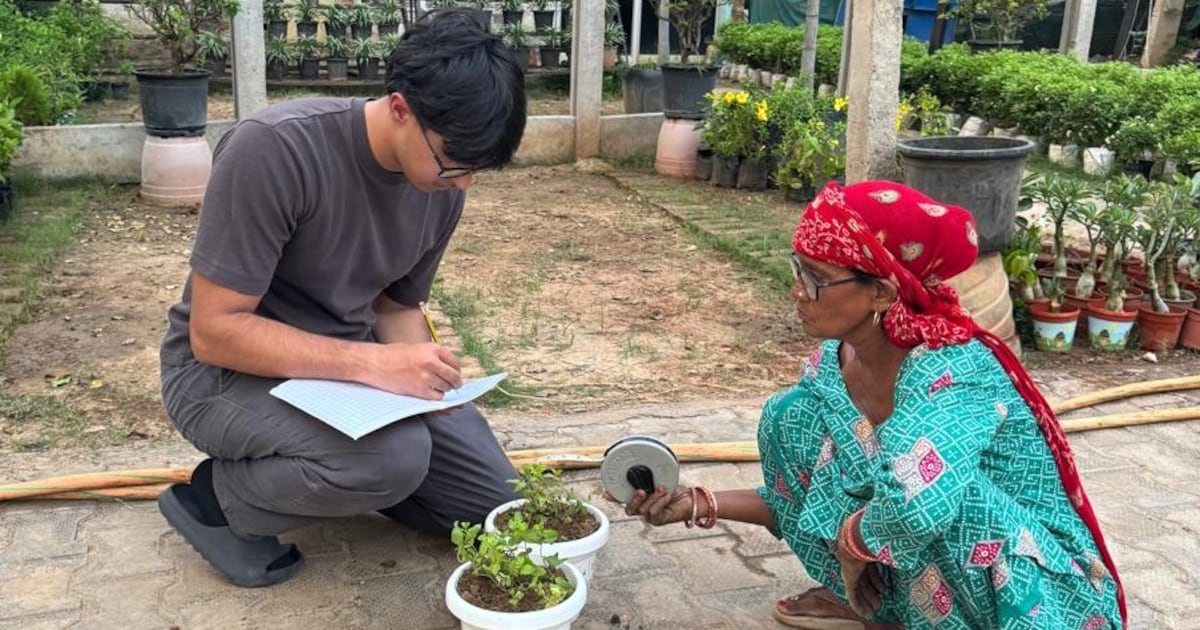
Currently, the BioFeathers formulations are undergoing trials at farms and nurseries across the UAE, Oman, and India. Initial controlled tests have indicated promising results, with some plant growth measurements reportedly 20 to 30 percent higher than commercial comparison treatments, though further extensive testing is required.
Looking ahead, the team plans to engage with Dubai authorities, including Dubai Municipality, to explore opportunities for wider implementation, potentially through initiatives like the Dubai Farms programme. This proactive engagement with government bodies highlights a strategic pathway for commercialisation and regulatory compliance as the project evolves. The low estimated production cost for the raw formula, less than Dh1 per 100ml due to the use of waste material, further underscores its potential economic viability, despite anticipated increases from packaging and logistics for large-scale distribution.