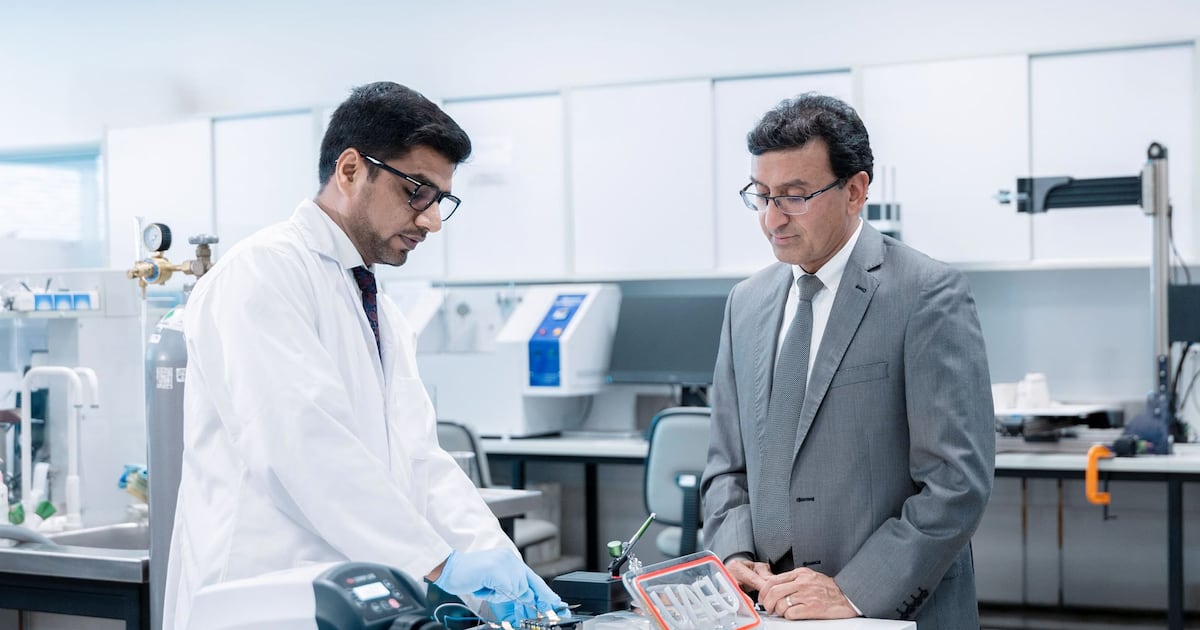
UAE University Secures US Patent for Groundbreaking Eco-Friendly Battery Technology Abu Dhabi, UAE – A prominent university in the United Arab Emirates has successfully obtained a United States patent for a pioneering eco-friendly battery cell. This intellectual property milestone signifies a notable advancement in sustainable energy solutions and underscores the UAE’s commitment to innovation in green technology. The United Arab Emirates University (UAEU) in Al Ain announced the grant of the US patent for its invention, termed the “metal-carbon dioxide battery cell.” This innovative technology is designed to transform carbon dioxide into electrical energy and valuable chemical products, including formate and various hydrocarbons. Advancing Clean Energy and Environmental Goals The patented battery system offers a practical and highly efficient method for addressing the global challenge of carbon emissions. By converting CO2, a major greenhouse gas, into usable energy and products, the invention presents a superior energy conversion performance compared to conventional battery systems, aligning with national and international environmental sustainability objectives. According to university officials, this achievement positions UAEU at the forefront of global leadership in clean energy technologies. The development is seen as a significant step in utilizing carbon dioxide for energy production, offering a viable solution to pollution while promoting environmental sustainability through high efficiency. Impact on UAE’s Sustainable Future The patented technology is expected to play a crucial role in the UAE’s ongoing efforts to protect the environment and cultivate a sustainable future. Experts involved in the project highlight its potential to contribute to emission reduction and facilitate the transition towards a green, innovation-driven economy. This development enhances the region’s intellectual property portfolio in critical sustainable technologies, reinforcing the legal and regulatory frameworks supporting clean energy innovation.

Padam Sundar Kafle Leads UAE Healthcare Innovation with Focus on Regulatory Compliance
UAE Healthcare Embraces Superintelligence with Focus on IP, Data Governance, and Digital Assets Dubai, UAE – The United Arab Emirates is rapidly advancing its healthcare sector through the integration of machine superintelligence and decentralised health ecosystems, marking a significant shift that brings forth crucial legal and regulatory considerations. This transformation is not merely technological but also entails developments in intellectual property, data protection, and the legal frameworks governing digital transactions within healthcare. Intellectual Property at the Core of Innovation A key aspect of this evolution is the development of novel technologies. Notably, the Personalised Artificial Healthcare Superintelligence (PAHSI) has been highlighted as a patent-pending innovation. This signifies a strong emphasis on protecting proprietary advancements within the burgeoning field of AI-driven healthcare solutions. The strategic pursuit of patents underscores the commercial and legal value attributed to these pioneering technologies designed to create digital health twins for patients, offering predictive insights and personalised care plans. Robust Data Governance and Regulatory Compliance Central to the implementation of superintelligent healthcare systems is a steadfast commitment to data privacy and regulatory compliance. Frameworks being developed actively prioritise “privacy-by-design,” ensuring alignment with the UAE’s stringent data protection laws. This includes adherence to the UAE Personal Data Protection Law (PDPL), as well as national healthcare data exchange standards such as NABIDH (National Authority for Health Information and Data) and Malaffi, Abu Dhabi’s health information exchange platform. This commitment aims to safeguard patient data, build trust, and ensure legal compliance as healthcare systems become more interconnected and data-intensive. Blockchain and Digital Assets Transforming Healthcare Payments and Data The advent of blockchain technology is set to redefine financial and data exchange layers in healthcare. ZettaCoin, a blockchain-based token, is being introduced to facilitate cross-hospital payments, virtual consultation settlements, and AI service remuneration. Critically, it also enables patient-controlled data monetisation and automates insurance processes through smart contracts. The underlying ZettaChain custom blockchain aims to render medical records secure, portable, and verifiable, crucially establishing patient ownership of their health data. This introduces complex legal questions around digital asset regulation, smart contract enforceability, and data ownership rights within a decentralised environment, pointing towards future regulatory developments in this space. Evolving Interoperability Standards and Legal Frameworks Traditional data formats in healthcare have presented challenges in terms of speed and security. In response, a new Domain Transport Language (DTL) has been developed to enhance data exchange efficiency and security across healthcare networks. This focus on standardisation and secure data transport is vital for nationwide interoperability, a goal that will require robust legal and regulatory frameworks to ensure seamless and compliant integration across diverse healthcare providers, including public and private sector systems. The overarching vision points towards a unified, multimodal UAE Health Graph, necessitating comprehensive legal guidelines for data integration and exchange. The UAE’s proactive approach to adopting advanced healthcare technologies, while integrating intellectual property protection, stringent data governance, and innovative digital financial mechanisms, underscores a dynamic legal and regulatory landscape that is continuously adapting to support the nation’s ambitious healthcare agenda.

Khalifa University’s TouchRipe Device: UAE IP and Regulatory Considerations
UAE Advances Innovation with Patent Filing and Tech Commercialisation Initiatives Abu Dhabi, UAE – Khalifa University of Science and Technology has announced a significant stride in the UAE’s innovation landscape with the filing of a US patent for its groundbreaking device, TouchRIPE. This development highlights the institution’s commitment to intellectual property protection and the commercialisation of advanced technologies within the region. Intellectual Property Protection for New Agri-Tech The newly patented innovation, TouchRIPE, is touted as the UAE’s first handheld fruit ripeness device. Developed by researchers at Khalifa University, this agri-tech solution offers a non-destructive method for assessing fruit firmness in under 30 seconds using a vision-based tactile sensor and embedded artificial intelligence. Its ability to operate without an internet connection makes it highly practical for on-field use by farmers, inspectors, and agri-businesses, promising to reduce waste, optimise harvest timing, and enhance quality control across the food supply chain. The filing of a US patent underscores the strategic importance placed on securing intellectual property rights for locally developed innovations with global potential. Fostering Technology Commercialisation and Startup Ecosystem Beyond individual patent filings, Khalifa University is actively contributing to the UAE’s knowledge-based economy through robust technology commercialisation efforts. Its Khalifa Innovation Centre (KIC) plays a pivotal role in nurturing Deep Tech startups by supporting them through the crucial stages of commercialisation for locally developed high-technologies. The showcasing of 10 KIC-backed Deep Tech startups at prominent technology events, GITEX Global 2025 and Expand North Star 2025, further exemplifies this focus. These startups, spearheaded by Khalifa University researchers, specialise in areas such as AI, robotics, health, energy, and sustainability solutions, reflecting the diverse innovation pipeline emerging from the UAE. Notable examples include Nutrigenics Care, an AI-powered clinical nutrition platform, and Kumrah AI, a spin-off from the university’s Advanced Research and Innovation Center focusing on neuromorphic vision systems for industrial inspection. This strategic emphasis on both securing patents for cutting-edge inventions and fostering a supportive ecosystem for new technology ventures is crucial for the UAE’s ambition to become a global hub for innovation and technological leadership. The initiatives demonstrate a clear pathway from academic research to market-ready solutions, reinforced by a commitment to intellectual property and commercial viability.

GCC Legal Perspective: FTAs Bolster Strict Seed Patents, Raising Farmers’ Rights Concerns
UAE’s Role in Global Trade Agreements and IP Standards Under Scrutiny Dubai, UAE – A recent analysis highlights the increasing trend among nations to embed stringent intellectual property (IP) provisions, particularly concerning seeds and biodiversity, within free trade agreements (FTAs). This development, which critics suggest could impact farmers’ rights and accelerate corporate consolidation in the agricultural sector, brings the United Arab Emirates (UAE) into focus as an emergent influential player in global trade negotiations. The report, issued by an international non-profit organisation focused on food sovereignty, details how a rising number of FTAs mandate signatory countries, especially those in the global South, to adopt plant variety protection standards aligned with the 1991 Act of the UPOV Convention (International Union for the Protection of New Varieties of Plants). This particular version of the international treaty is recognised as the most recent and restrictive. The UPOV Convention and Its Implications The UPOV Convention aims to provide seed corporations with monopoly rights, typically lasting 20 to 25 years, over new crop varieties they develop. A key criticism levelled against this framework is its potential to restrict farmers from the traditional practice of freely saving and reusing these seeds, thereby altering longstanding agricultural practices, rights, and knowledge systems. While major economies like the United States, European Union, Australia, and Japan have historically leveraged FTAs to promote UPOV-aligned regulations, the UAE has recently been identified as a significant new advocate for these provisions. The report notes the UAE’s successful integration of UPOV-style clauses into FTAs with nations such as Cambodia, Malaysia, and Mauritius. However, efforts to influence India in this regard reportedly faced resistance. UAE’s Expanding Influence in Trade and IP Policy The growing economic and investment footprint of the UAE, particularly across Africa and Asia, underpins its increasing assertiveness in shaping international trade norms. As a substantial investor in overseas farming and food production, the UAE’s active promotion of UPOV standards in its trade partnerships marks a notable shift in global IP policy dynamics. Beyond UPOV 1991, the analysis reveals that numerous FTAs compel countries not only to accede to this convention but also to implement plant patent laws or sign the Budapest Treaty, which streamlines the patenting process for micro-organisms. These provisions are observed to extend beyond existing international standards and are negotiated within trade frameworks, often bypassing broader public discourse on their societal and economic impacts. An interactive mapping resource accompanying the report illustrates two decades of FTAs containing UPOV-style seed clauses, pinpointing both the nations advocating these provisions and those facing pressure to comply. This highlights the evolving landscape of intellectual property law as it intersects with international trade and agricultural policy.

GCC Pharma & Bio: Patent Expiry Reshapes IP & Regulatory Landscape
UAE Prepares for Patent Expiration of Key Obesity Treatment Ingredient Dubai, UAE – The pharmaceutical landscape in the United Arab Emirates is poised for a significant shift as the patent for semaglutide, the active ingredient in a prominent obesity treatment, is slated to expire next year. This development places the UAE among several global markets bracing for increased competition and the potential introduction of lower-cost generic alternatives. Semaglutide, currently owned by Danish pharmaceutical giant Novo Nordisk, has been a blockbuster drug in the global market. However, with patent expirations looming in various jurisdictions, the industry is witnessing a preemptive wave of market adjustments and the accelerated development of generic versions. Impending Market Shift Industry observers note that the expiration of patents typically ushers in an era of enhanced market competition, primarily through the entry of generic drug manufacturers. This trend is expected to foster greater accessibility and affordability for patients, a development often referred to as a “low-cost war” for essential treatments. While the article highlights patent expirations in countries like India, China, Canada, Brazil, Turkey, and South Africa, the inclusion of the United Arab Emirates signifies a direct impact on the GCC region’s pharmaceutical sector. This situation could lead to a broader availability of semaglutide-based medications within the UAE, potentially benefitting a significant portion of the population. Strategic Responses to Patent Expiration In anticipation of these market changes, original patent holders are often observed implementing strategic measures, including price adjustments, to maintain market share against impending generic competition. This proactive approach reflects the evolving dynamics of the pharmaceutical industry as intellectual property protections conclude. The regulatory frameworks within the UAE, which govern the approval and market entry of generic drugs, will be central to how these developments unfold. The ability of local and international generic manufacturers to bring their products to market promptly after patent expiration will determine the extent of the impact on drug pricing and patient access. The upcoming patent expiry for semaglutide in the UAE underscores the critical interplay between intellectual property law, market competition, and public health policy in the global pharmaceutical industry. It presents both a challenge for established market players and an opportunity for broader patient access to treatments.
Protect Your Innovations with Professional Patent Registration Services
Innovation is the driving force behind business growth and technological advancement. Whether you have developed a groundbreaking product, a unique manufacturing process, or an inventive technological solution, protecting your intellectual property is essential. Securing Patent Registration Saudi Arabia allows inventors and businesses to gain exclusive legal rights over their innovations while preventing unauthorized use by competitors. AL ajaleen Law & Intellectual Property offers comprehensive legal support to help entrepreneurs, startups, researchers, and businesses protect their inventions through a smooth and legally compliant patent registration process. Why Patent Protection Is Important Developing an invention often requires significant investment, creativity, and years of research. Without legal protection, others may copy or commercially exploit your innovation, reducing its market value and competitive advantage. A patent grants the inventor exclusive rights to use, manufacture, license, or sell an invention for a specified period, subject to applicable laws. This legal protection encourages innovation while providing businesses with opportunities to generate revenue and strengthen their position in the marketplace. Benefits of Professional Patent Registration Services Exclusive Legal Rights Patent registration gives inventors exclusive ownership of their innovation, preventing unauthorized manufacturing, use, or commercialization by third parties without permission. Stronger Competitive Advantage Businesses with patented inventions gain a distinct advantage by protecting unique technologies, products, or processes from imitation, helping them maintain market leadership. Increased Commercial Value A patent is a valuable intellectual property asset that can enhance a company’s overall worth. It may also create opportunities for licensing, technology transfer, partnerships, and investment. Greater Investor Confidence Investors often consider patented technologies as indicators of innovation and long-term business potential. Strong patent protection can improve investor confidence and support business expansion. Protection Against Infringement Patent registration provides a stronger legal foundation for enforcing ownership rights. If infringement occurs, legal professionals can assist in protecting the inventor’s interests through appropriate legal measures. Why Choose Experienced Patent Professionals? The patent registration process requires careful preparation, technical documentation, legal analysis, and compliance with applicable intellectual property regulations. Professional legal advisors help clients evaluate the patentability of their inventions, prepare comprehensive applications, and manage the filing process efficiently. In addition to registration, experienced professionals provide support for patent portfolio management, licensing agreements, renewals, enforcement strategies, and intellectual property planning. Their expertise helps clients maximize the commercial value of their innovations while minimizing legal risks. Conclusion Every innovative idea deserves strong legal protection to secure its future value and commercial potential. Whether you are an inventor, entrepreneur, researcher, or growing business, obtaining Patent Registration Saudi Arabia is an important step toward safeguarding your intellectual property and maintaining a competitive edge. AL ajaleen Law & Intellectual Property is committed to delivering trusted legal expertise, personalized patent solutions, and comprehensive support that helps innovators confidently protect and commercialize their valuable inventions. Frequently Asked Questions Q1. What is a patent? A patent is a legal right granted to an inventor that provides exclusive protection for a new invention, preventing others from making, using, selling, or distributing it without authorization. Q2. Who can apply for a patent? Inventors, startups, businesses, research institutions, universities, and organizations that have developed new and innovative products, technologies, or processes may apply for patent protection. Q3. Why is patent registration beneficial? Patent registration protects inventions from unauthorized use, strengthens business value, creates licensing opportunities, supports investment, and provides exclusive commercial rights. Q4. How can patent lawyers assist with registration? Patent professionals help assess patent eligibility, prepare technical documentation, file applications, manage legal procedures, provide strategic advice, and support enforcement of patent rights when necessary.

Launch Your Business with Confidence Through Professional Company Registration Services
Starting a business is an exciting milestone, but it also comes with legal responsibilities that require careful planning and expert guidance. From choosing the right business structure to completing legal documentation and meeting regulatory requirements, every step plays an important role in building a successful enterprise. Choosing Company Registration Saudi Arabia helps entrepreneurs and investors establish their businesses efficiently while ensuring compliance with applicable laws. AL ajaleen Law & Intellectual Property provides comprehensive legal support to simplify the registration process and help businesses begin their journey on a strong legal foundation. Why Company Registration Is Important A legally registered company provides credibility, operational security, and the ability to conduct business with confidence. Registration enables businesses to enter into contracts, open corporate bank accounts, attract investors, and build trust with customers, suppliers, and strategic partners. Professional legal guidance ensures that every stage of the registration process is completed accurately. This reduces administrative delays, minimizes legal risks, and allows business owners to focus on developing their operations rather than navigating complex legal procedures. Benefits of Professional Company Registration Services Legal Recognition A registered company becomes a recognized legal entity with the authority to conduct commercial activities, enter into agreements, and operate in accordance with applicable business regulations. Smooth Registration Process Company formation involves documentation, approvals, licensing requirements, and legal formalities. Professional advisors streamline these procedures, helping businesses avoid common mistakes and unnecessary delays. Improved Business Credibility A formally registered company creates greater confidence among customers, investors, financial institutions, suppliers, and business partners. Legal recognition strengthens the company’s professional image and market reputation. Better Growth Opportunities As businesses expand, proper registration supports investment opportunities, partnerships, commercial transactions, and long-term strategic development. A strong legal foundation makes future expansion more efficient. Ongoing Legal Support Business requirements continue after registration. Professional legal advisors provide ongoing assistance with corporate governance, regulatory compliance, commercial agreements, intellectual property protection, and other legal matters that support sustainable growth. Why Choose Experienced Legal Professionals? Every business has unique objectives, ownership structures, and operational needs. Experienced legal professionals provide personalized advice that aligns with each client’s goals while ensuring compliance with applicable legal requirements. From selecting the most suitable legal structure to preparing documentation and managing regulatory procedures, professional advisors simplify the entire registration process. Their expertise helps entrepreneurs avoid costly legal issues while establishing a business that is prepared for long-term success. Conclusion Building a successful business begins with making informed legal decisions from the very beginning. Whether you are launching your first venture, expanding an existing enterprise, or entering new markets, choosing Company Registration Saudi Arabia provides the legal guidance needed to establish your business with confidence. AL ajaleen Law & Intellectual Property is dedicated to delivering trusted legal expertise, personalized business registration solutions, and ongoing support that helps entrepreneurs and organizations achieve sustainable growth while remaining legally compliant. Frequently Asked Questions Q1. Why is company registration important? Company registration provides legal recognition, enhances business credibility, supports regulatory compliance, and enables businesses to operate through a formal legal entity. Q2. Who should register a company? Entrepreneurs, startups, foreign investors, family businesses, small enterprises, and corporations planning to conduct commercial activities should complete the company registration process. Q3. What are the benefits of professional legal assistance during company registration? Professional legal advisors help prepare documentation, ensure regulatory compliance, reduce administrative delays, recommend suitable business structures, and minimize legal risks throughout the process. Q4. Can legal professionals assist after the company is registered? Yes. Ongoing legal services may include corporate governance, contract drafting, regulatory compliance, commercial advisory, intellectual property protection, and legal representation as business needs evolve.

Protect Your Brand Identity with Professional Trademark Registration Services
Your brand is really important to your business. It is what people think of when they hear your company name. It helps build trust with your customers and makes your products or services stand out from others. As your business grows it becomes more important to protect your brand legally. One way to do this is by choosing Trademark Registration Saudi Arabia. This helps you get rights over your business identity and stops others from using it without permission. AL ajaleen Law & Intellectual Property can guide you through the process and provide you with the legal help you need to protect your brand. Why Trademark Protection Matters A trademark is not a logo or a name. It is what makes your business unique. Customers associate trademarks with the quality of your products or services. If you do not protect your trademark someone else might copy it. This can confuse your customers. Registering your trademark helps you prove that you own it and stops others from using it. This makes your business stronger. Helps it grow in the long run. Benefits of Professional Trademark Registration Services Exclusive Ownership Rights When you register your trademark you get the right to use it for your products or services. This stops others from using something that might confuse your customers. Stronger Brand Recognition Protecting your trademark makes your brand stronger and more recognizable. This makes it easier to promote your business and expand it to markets. Legal Protection Against Infringement If someone copies your trademark, registering it gives you a case to stop them. Professional legal help makes it easier for you to deal with these kinds of problems. Valuable Business Asset A registered trademark is a part of your business that can increase its overall worth. It can also help you with licensing, partnerships and expanding your business in the future. Long-Term Business Security Protecting your brand now can save you from legal problems later. Professional help with trademark management makes sure everything runs smoothly. Why Choose Experienced Trademark Professionals? Registering a trademark involves a lot of work like research and paperwork. Experienced professionals can help you avoid mistakes and make sure your registration is successful. These professionals can also help you with searching for trademarks, managing your portfolio, renewing your registration and dealing with issues. Their expertise gives you legal support throughout the whole process protecting your brand. Conclusion Your brand deserves to be protected so it can grow and succeed in the run. Whether you are starting a business launching a product or expanding to new markets, getting Trademark Registration Saudi Arabia is a good investment, in your reputation and business identity. AL ajaleen Law & Intellectual Property is committed to giving you trusted advice, personalized solutions and dependable support to help you protect and strengthen your brand. Frequently Asked Questions Q1. What is a trademark? A trademark is a word, logo, symbol, slogan or design that is legally protected and identifies your business’s products or services. Q2. Why should I register my trademark? Registering your trademark gives you rights, strengthens your legal protection, stops others from using it without permission, increases your brand’s value and helps your business grow in the long run. Q3. Who should apply for trademark registration? Anyone who wants to protect their brand like entrepreneurs, startups, manufacturers, retailers, service providers, corporations and organizations should consider registering their trademark. Q4. How can trademark lawyers help during the registration process? They can help you search for trademarks, prepare your application, make sure everything is classified correctly, handle paperwork, monitor your registration, renew it when needed and give you legal support if someone copies your trademark.

Protect Your Ideas and Strengthen Your Brand with Expert Intellectual Property Legal Services
Innovation is one of the most valuable assets a business can own. From unique products and creative works to brand identities and groundbreaking technologies, intellectual property plays a critical role in long-term business success. Protecting these assets requires experienced legal guidance and a proactive approach. Choosing an Intellectual Property Law Firm Saudi Arabia helps businesses, entrepreneurs, inventors, and creators safeguard their intellectual assets while ensuring compliance with applicable laws. AL ajaleen Law & Intellectual Property provides comprehensive intellectual property services designed to help clients protect, manage, and enforce their valuable rights with confidence. Why Intellectual Property Protection Matters Intellectual property represents the ideas, innovations, and creative efforts that distinguish one business from another. Trademarks, patents, copyrights, industrial designs, and trade secrets contribute to a company’s identity, reputation, and competitive advantage. Without proper legal protection, these valuable assets may be copied, misused, or exploited without authorization. Professional legal support helps clients secure ownership rights, reduce legal risks, and establish a strong foundation for future commercial growth. Benefits of Professional Intellectual Property Legal Services Comprehensive Brand Protection A strong brand is essential for business success. Legal professionals assist with protecting trademarks, business names, logos, and other branding elements that help businesses stand out in competitive markets. Protection for Innovation Inventors and businesses invest significant time and resources into developing new ideas. Professional legal advisors help protect inventions and technological advancements through appropriate intellectual property strategies. Safeguarding Creative Works Original content, software, artistic creations, marketing materials, and digital assets represent valuable business resources. Legal guidance helps ensure these works are properly protected against unauthorized use or reproduction. Enforcement of Intellectual Property Rights When intellectual property rights are infringed, experienced legal professionals help clients pursue appropriate legal remedies. They provide strategic guidance during negotiations, dispute resolution, and legal proceedings to safeguard client interests. Increased Commercial Value Well-managed intellectual property portfolios strengthen business credibility and can create valuable commercial opportunities through licensing, partnerships, investments, and business expansion. Why Choose Experienced Intellectual Property Professionals? Intellectual property law involves detailed legal procedures, strategic planning, and ongoing management. Experienced legal professionals understand the complexities involved in protecting intellectual assets across different industries and business models. Professional advisors provide assistance with intellectual property registration, portfolio management, legal documentation, licensing agreements, compliance, and dispute resolution. Their practical approach helps businesses maximize the value of their intellectual property while reducing legal uncertainty and protecting long-term commercial interests. Conclusion Protecting your intellectual assets is an investment in the future of your business. Whether you are launching a new brand, developing innovative technology, or creating original content, partnering with a trusted Intellectual Property Law Firm Saudi Arabia helps secure your legal rights and strengthen your competitive position. AL ajaleen Law & Intellectual Property is committed to delivering dependable legal expertise, personalized intellectual property solutions, and long-term support that empowers businesses and innovators to protect what matters most. Frequently Asked Questions Q1. What is intellectual property? Intellectual property includes valuable creations such as trademarks, patents, copyrights, industrial designs, trade secrets, and other original works that are legally protected. Q2. Why is intellectual property protection important? It helps safeguard innovations, protect brand identity, prevent unauthorized use, strengthen business value, and provide legal remedies if infringement occurs. Q3. Who can benefit from intellectual property legal services? Entrepreneurs, startups, corporations, inventors, software developers, designers, artists, researchers, manufacturers, and content creators can all benefit from professional intellectual property protection. Q4. How can intellectual property lawyers help businesses? They assist with legal registration, portfolio management, licensing agreements, compliance, enforcement of intellectual property rights, dispute resolution, and strategic legal advice to protect valuable business assets.

UAE Outlines 8 Categories of Foreigners Eligible for Citizenship Under New Regulations
UAE Publishes Detailed Eligibility Criteria for Foreign National Citizenship Abu Dhabi, UAE – The United Arab Emirates government has officially released comprehensive criteria outlining the eight specific categories of foreign nationals eligible for consideration for UAE citizenship. This development clarifies the legal framework governing naturalisation processes in the country. The updated guidelines, accessible on the official UAE government website, emphasize that the authority for nominating and approving citizenship applications remains exclusively with the President, the Rulers’ and Crown Princes’ Courts, Executive Councils, and the Cabinet. This structure underscores a highly centralised and selective approach to granting Emirati nationality. Key Categories and Conditions The eight categories target individuals who can contribute significantly to the nation’s economy, innovation, and cultural landscape. These include: Investors: Applicants in this category must own property within the UAE. Doctors: Eligibility is confined to medical practitioners specialising in fields identified by the UAE as high-demand. Specialists: Individuals recognised in specific professional fields are required to take an oath of allegiance as part of the naturalisation process. Inventors: Prospective citizens under this category must hold at least one patent acknowledged by either the UAE Ministry of Economy or a reputable international organisation, highlighting the nation’s focus on intellectual property and innovation. Scientists: Conditions for scientists’ eligibility will be determined by relevant UAE authorities, reflecting a strategic interest in scientific advancement. Intellectuals: This category is reserved for individuals who have achieved significant recognition in the cultural or artistic domains. Talented Individuals and Artists: This broad category also extends eligibility to immediate family members of qualifying applicants, a notable inclusion designed to attract and retain creative talent. Exceptional Creative Talents: A final category is dedicated to individuals demonstrating extraordinary creative abilities. The detailed publication of these categories on the government’s official platform signifies a transparent and structured legal approach to attracting and integrating highly skilled and valuable individuals into the UAE’s society and economy. This regulatory update is part of the broader government legal frameworks aimed at enhancing the nation’s human capital and global competitiveness.